
BIGBEAR
PHARMACEUTICAL
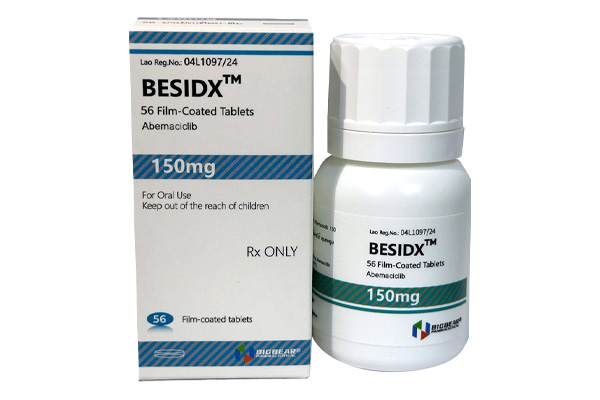
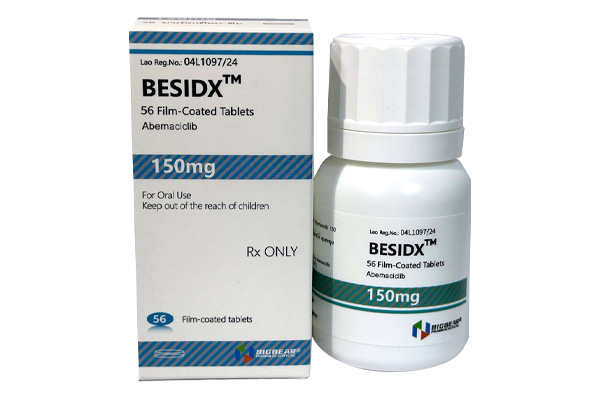
Abemaciclib is a kinase inhibitor that exerts its therapeutic effect by selectively inhibiting cyclin-dependent kinases 4 and 6 (CDK4/6).

 AuthenticGuaranteeFast DeliveryPrivacy
 This medication is primarily indicated for the treatment of patients with hormone receptor (HR)-positive, human epidermal growth factor receptor 2 (HER2)-negative breast cancer. It can be administered in combination with endocrine therapy or as a monotherapy, which significantly reduces the risk of disease recurrence or delays disease progression.
This product, in combination with endocrine therapy (tamoxifen or an aromatase inhibitor), is indicated for the adjuvant treatment of adult patients with hormone receptor (HR)-positive, human epidermal growth factor receptor 2 (HER2)-negative, node-positive early breast cancer at high risk of recurrence and with a Ki-67 index ≥20%.
This product is indicated for the treatment of HR-positive, HER2-negative locally advanced or metastatic breast cancer in adults:
1.In combination with an aromatase inhibitor as initial endocrine therapy for postmenopausal women.
2.In combination with fulvestrant for patients with disease progression following prior endocrine therapy.
Abemaciclib treatment should be initiated and monitored by a physician experienced in antineoplastic therapy.
The recommended dose of abemaciclib when used in combination with endocrine therapy is 150 mg twice daily. For the recommended dose of the endocrine therapy agent, please refer to its prescribing information.
Pre-/peri-menopausal women receiving abemaciclib in combination with endocrine therapy should also receive a gonadotropin-releasing hormone (GnRH) agonist according to current clinical practice standards.
If a patient vomits or misses a dose of abemaciclib, they should continue dosing at the next scheduled time; do not administer a make-up dose.
Route: Oral.
Timing: May be taken with or without food. Do not co-administer with grapefruit or grapefruit juice.
Frequency: Administer at approximately the same time each day.
Tablet Handling: Swallow tablets whole. Do not chew, crush, or split tablets before swallowing.
Abemaciclib should be continued for 2 years, or until disease recurrence or unacceptable toxicity occurs.
Treatment should be continued as long as the patient derives clinical benefit from abemaciclib, or until unacceptable toxicity occurs.
Initial recommended dose: 150 mg twice daily.
First dose reduction: 100 mg twice daily.
Second dose reduction: 50 mg twice daily.
Complete blood counts should be monitored:
Before initiating treatment
Every 2 weeks for the first 2 months
Monthly for the subsequent 2 months
As clinically indicated
Before starting abemaciclib, the following criteria must be met:
Absolute Neutrophil Count (ANC) ≥ 1,500/mm³.
Platelet count ≥ 100,000/mm³.
Hemoglobin ≥ 8 g/dL.
Grade 1 or 2 toxicity: No dose adjustment is required.
Grade 3 toxicity: Interrupt therapy until the toxicity resolves to Grade 2 or lower. No dose reduction is needed.
Grade 3 (recurrent) or Grade 4 toxicity: Interrupt therapy until the toxicity resolves to Grade 2 or lower. Resume treatment at the next lower dose level.
Note: If a patient requires hematopoietic growth factor support, interrupt abemaciclib for at least 48 hours after the last dose of the growth factor, until toxicity resolves to Grade 2 or lower. Resume at the next lower dose level. If the dose was already reduced due to toxicity requiring growth factors, no further reduction is needed.
Initiate antidiarrheal therapy (e.g., loperamide) at the first onset of loose stools.
Grade 1 diarrhea: No dose adjustment is required.
Grade 2 diarrhea: If toxicity does not resolve to Grade 1 or lower within 24 hours, interrupt therapy until recovery. No dose reduction is needed.
Persistent Grade 2 diarrhea (despite maximal supportive care) or recurrent Grade 2 diarrhea after resumption at the same dose: Interrupt therapy until the toxicity resolves to Grade 1 or lower. Resume treatment at the next lower dose level.
Grade 3 or 4 diarrhea, or diarrhea requiring hospitalization: Interrupt therapy until the toxicity resolves to Grade 1 or lower. Resume treatment at the next lower dose level.
Liver function tests (ALT and AST) should be monitored:
Before initiating treatment.
Every 2 weeks for the first 2 months.
Monthly for the subsequent 2 months.
As clinically indicated.
Grade 1 toxicity (ALT/AST > ULN to 3.0 × ULN): No dose adjustment is required.
Grade 2 toxicity (ALT/AST > 3.0 to 5.0 × ULN) without total bilirubin >2 × ULN; persistent/recurrent Grade 2 toxicity; or Grade 3 toxicity (ALT/AST > 5.0 to 20.0 × ULN) without total bilirubin >2 × ULN: Interrupt therapy until the toxicity resolves to baseline or Grade 1. Resume treatment at the next lower dose level.
ALT/AST >3 × ULN with total bilirubin >2 × ULN (in the absence of cholestasis), or Grade 4 toxicity (ALT/AST >20.0 × ULN): Discontinue abemaciclib permanently.
Grade 1 or 2 ILD/pneumonitis: No dose adjustment is required.
Persistent or recurrent Grade 2 ILD/pneumonitis (despite maximal supportive care): Interrupt therapy until the toxicity resolves to baseline or Grade 1. Resume treatment at the next lower dose level.
Grade 3 or 4 ILD/pneumonitis: Discontinue abemaciclib permanently.
Early Breast Cancer (all grades 1-4): Interrupt therapy and treat according to clinical guidelines. Resume treatment once the patient’s clinical condition is stable.
Locally Advanced or Metastatic Breast Cancer, Grade 1 or 2: No dose adjustment is required.
Locally Advanced or Metastatic Breast Cancer, Grade 3 or 4: Interrupt therapy and treat according to clinical guidelines. Resume treatment once the patient’s clinical condition is stable.
Excludes hematologic toxicity, diarrhea, transaminase elevation, ILD/pneumonitis, and venous thromboembolic events.
Grade 1 or 2 toxicity: No dose adjustment is required.
Persistent or recurrent Grade 2 toxicity (despite maximal supportive care): Interrupt therapy until the toxicity resolves to Grade 1 or lower. Resume treatment at the next lower dose level.
Grade 3 or 4 toxicity: Interrupt therapy until the toxicity resolves to Grade 1 or lower. Resume treatment at the next lower dose level.
Strong CYP3A4 Inhibitors: Avoid concomitant use. If unavoidable:
1.Reduce the dose of abemaciclib to 100 mg twice daily.
2.If already reduced to 100 mg twice daily, further reduce to 50 mg twice daily.
3.If already reduced to 50 mg twice daily, consider continuing at 50 mg twice daily with close monitoring, or reducing to 50 mg once daily or discontinuing abemaciclib.
4.When the strong CYP3A4 inhibitor is discontinued, increase the abemaciclib dose to the pre-inhibitor dose after 3 to 5 half-lives of the inhibitor.
5.Moderate or Weak CYP3A4 Inhibitors: No dose adjustment is required, but monitor closely for toxicities.
No dose adjustment is required based on age.
Mild or Moderate Impairment: No dose adjustment is required.
Severe Impairment, End-Stage Renal Disease, or Dialysis: Limited data are available. Use with caution and monitor closely for toxicities.
Mild (Child-Pugh A) or Moderate (Child-Pugh B) Impairment: No dose adjustment is required.
Severe (Child-Pugh C) Impairment: Reduce the frequency to once daily.
The safety and efficacy of abemaciclib in children and adolescents under 18 years of age have not been established.
Females of reproductive potential should use effective contraception (e.g., double barrier methods) during treatment and for at least 3 weeks after completing treatment.
There are no data on the use of abemaciclib in pregnant women. Animal studies have demonstrated reproductive toxicity. Abemaciclib is not recommended for use during pregnancy or in females of reproductive potential who are not using contraception.
It is unknown whether abemaciclib is excreted in human milk. The risk to neonates/infants cannot be excluded. Patients receiving abemaciclib should not breastfeed.
The safety and efficacy of abemaciclib in children and adolescents under 18 years of age have not been established, and no relevant data are available.
No dose adjustment is required based on age.
The most frequently occurring adverse reactions in clinical studies include diarrhea, infection, neutropenia, leukopenia, anemia, fatigue, nausea, vomiting, alopecia, and decreased appetite.
Among the most common adverse reactions, the incidence of Grade ≥3 events is less than 5%, with the exception of neutropenia, leukopenia, and diarrhea.
Abemaciclib is contraindicated in patients with a known hypersensitivity to abemaciclib or any of its excipients.
Neutropenia has been reported in patients receiving abemaciclib. For patients with Grade 3 or 4 neutropenia, dose adjustment is recommended. Fatal events due to neutropenic sepsis occurred in less than 1% of patients with metastatic breast cancer. Patients should be instructed to report any fever to their healthcare provider.
The incidence of infection is higher in patients receiving abemaciclib in combination with endocrine therapy compared to those receiving endocrine therapy alone. Pulmonary infections not complicated by neutropenia have been reported in patients treated with abemaciclib. Fatal events occurred in less than 1% of patients with metastatic breast cancer. Monitor patients for signs and symptoms of infection and treat as clinically indicated.
In three clinical trials (monarchE, MONARCH 2, MONARCH 3) involving 3,559 patients, 2–5% of patients receiving abemaciclib reported venous thromboembolic events, including deep vein thrombosis, pulmonary embolism, pelvic vein thrombosis, cerebral sinus thrombosis, internal jugular and brachiocephalic vein thrombosis, and inferior vena cava thrombosis. Fatalities due to venous thromboembolism were reported in clinical trials.
Abemaciclib has not been studied in patients with early breast cancer and a prior history of venous thromboembolism. Monitor patients for signs and symptoms of venous thrombosis and pulmonary embolism, and treat as clinically indicated. For patients with early breast cancer who experience venous thromboembolism of any grade, or those with locally advanced or metastatic breast cancer who experience Grade 3 or 4 venous thromboembolism, temporary interruption of abemaciclib is recommended.
Elevations in alanine aminotransferase (ALT) and aspartate aminotransferase (AST) have been reported in patients receiving abemaciclib. Dose adjustment may be required based on the level of ALT or AST elevation.
Diarrhea is the most common adverse reaction. In clinical studies, the median time to first onset of diarrhea was approximately 6 to 8 days, with a median duration of 6 to 11 days (Grade 2) and 5 to 8 days (Grade 3). Diarrhea may lead to dehydration. Patients should initiate antidiarrheal therapy (e.g., loperamide) at the first occurrence of loose stools, increase oral fluid intake, and notify their healthcare provider. Dose adjustment is recommended for patients with Grade ≥2 diarrhea.
ILD/pneumonitis has been reported in patients receiving abemaciclib. Monitor patients for pulmonary symptoms suggestive of ILD/pneumonitis and treat as clinically indicated. Dose adjustment may be required based on the severity of ILD/pneumonitis. Patients with Grade 3 or 4 ILD/pneumonitis should permanently discontinue abemaciclib.
Avoid concomitant use of strong CYP3A inducers due to the risk of reduced abemaciclib efficacy.
There are no data on the efficacy and safety of abemaciclib in patients with visceral crisis.
Patients with rare hereditary problems of galactose intolerance, Lapp lactase deficiency, or glucose-galactose malabsorption should not take abemaciclib.
Each tablet of abemaciclib contains less than 1 mmol sodium (23 mg), which is essentially “sodium-free”.
The effect of abemaciclib on human fertility is unknown. No effects on male fertility were observed in rats; however, cytotoxic effects on the male reproductive tract in mice, rats, and dogs suggest that abemaciclib may impair male fertility. No adverse effects on female reproductive organs were observed in mice, rats, or dogs, and no effects on female fertility or early embryonic development were observed in rats.
Abemaciclib has minimal impact on the ability to drive or operate machinery. Patients are advised to exercise caution if they experience fatigue or dizziness during treatment.
If any issues arise, please contact us immediately.
Email:laosbigbear@gmail.com
Abemaciclib is used to treat HR-positive and HER2-negative breast cancer in adults. It is a targeted treatment, not a chemotherapy drug (see Is Verzenio (abemaciclib) a chemo drug?).
Abemaciclib (brand name Verzenio) first gained FDA approval on September 28, 2017. There is no generic Verzenio.
Avoid taking ketoconazole during treatment with abemaciclib. Tell your healthcare provider if you take a medicine that contains ketoconazole.
Avoid grapefruit and products that contain grapefruit during treatment with abemaciclib. Grapefruit may increase levels of this medicine in your blood.
Sometimes it is not safe to use certain medicines at the same time. Some drugs can affect your blood levels of other drugs you use, which may increase side effects or make the medicines less effective.
Tell your doctor about all your other medicines, especially ketoconazole. You should not take ketoconazole while you are being treated with abemaciclib.
Ketoconazole is a strong CYP3A4 inhibitor and coadministration of abemaciclib with strong CYP3A4 inhibitors should be avoided because they can increase abemaciclib concentrations.
Other medications that are strong CYP3A4 inhibitors include clarithromycin, itraconazole, lopinavir/ritonavir, posaconazole, and voriconazole. Grapefruit or grapefruit juice should also be avoided.
The dose of abemaciclib should be reduced if co-administered with moderate CYP3A4 inhibitors, such as
verapamil or diltiazem.
Take abemaciclib as soon as you can, but skip the missed dose if it is almost time for your next dose. Do not take two doses at one time.
If you vomit shortly after taking abemaciclib, do not take another dose. Take your next dose as scheduled.
Copyright2024@ BIGBEAR All right reserved Bigbear | Bigbear Pharmaceutical | Bigbear Laos


